


Hey there! As a supplier of printing wall fabric, I often get asked about how to measure the amount of fabric needed for a project. It's a crucial step because getting the quantity right can save you both time and money. So, let's dive into the details on how you can accurately measure the printing wall fabric you'll require.
Measuring for a Simple Rectangular Wall
The most common scenario is measuring for a rectangular wall. It's relatively straightforward. First, you'll need a measuring tape. Measure the height of the wall from the floor to the ceiling. Make sure to measure in a straight line, and it's best to take a few measurements at different points along the wall to account for any irregularities. Write down the tallest measurement.
Next, measure the width of the wall. Start from one corner and go all the way to the opposite corner. Again, take multiple measurements if the wall isn't perfectly straight and use the widest measurement.
Once you have the height and width, multiply these two numbers together. For example, if your wall is 8 feet high and 12 feet wide, the area is 8 x 12 = 96 square feet.
But hold on! You can't just order 96 square feet of fabric. You need to consider the pattern repeat and any wastage. Patterns on the fabric often need to be matched up, which means you might have to cut the fabric in a way that leaves some scraps. A good rule of thumb is to add about 10 - 15% to your calculated area to account for this. So, for our 96 - square - foot wall, you'd want to order between 105.6 (96 + 96 * 0.1) and 109.44 (96+96 * 0.15) square feet of fabric.
Measuring for Walls with Windows and Doors
If your wall has windows or doors, you'll need to subtract their areas from the total wall area. Measure the height and width of each window and door just like you did for the wall. Multiply the height by the width to get the area of each opening.
Let's say you have a window that is 3 feet high and 4 feet wide. The area of the window is 3 x 4 = 12 square feet. If you have a door that is 7 feet high and 3 feet wide, its area is 7 x 3 = 21 square feet.

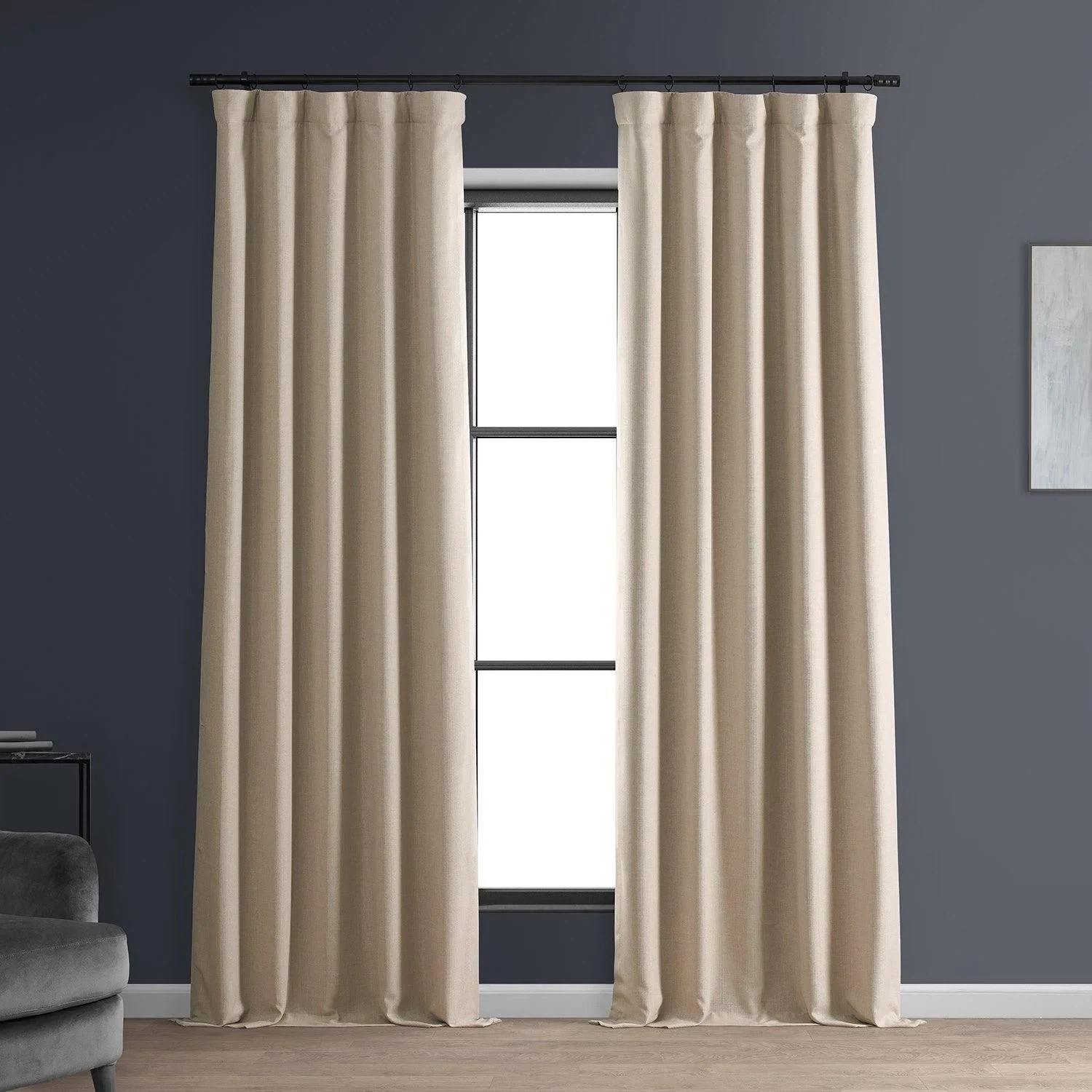
If our previous wall had this window and door, we'd subtract the combined area of the window and door (12 + 21 = 33 square feet) from the total wall area of 96 square feet. So, the net area of the wall to be covered is 96 - 33 = 63 square feet. Then, add that 10 - 15% for pattern matching and wastage. So, you'd order between 69.3 (63+63 * 0.1) and 72.45 (63 + 63 * 0.15) square feet of fabric.
Measuring for Irregular - Shaped Walls
Irregular - shaped walls can be a bit trickier. One way to handle them is to break the wall into smaller, regular shapes like rectangles and triangles.
For rectangles, you already know how to measure the area (height x width). For triangles, measure the base (the bottom side) and the height (the perpendicular distance from the base to the opposite corner). The area of a triangle is calculated as 0.5 x base x height.
Let's say you have an irregular wall that can be divided into a rectangle that is 6 feet high and 8 feet wide (area = 6 x 8 = 48 square feet) and a triangle with a base of 4 feet and a height of 3 feet (area = 0.5 x 4 x 3 = 6 square feet). The total area of the wall is 48+6 = 54 square feet. Then, as always, add 10 - 15% for wastage. So, you'd order between 59.4 (54+54 * 0.1) and 62.1 (54 + 54 * 0.15) square feet of fabric.
Considering the Fabric Width
The width of the fabric also plays a role in your measurement. Most printing wall fabrics come in standard widths, like 54 inches or 60 inches. When you calculate the amount of fabric, you need to figure out how many widths of fabric you'll need to cover the wall width.
Let's say your wall is 10 feet wide (120 inches) and your fabric is 54 inches wide. Divide the wall width by the fabric width: 120 / 54 ≈ 2.22. Since you can't buy a fraction of a width, you'll need 3 widths of fabric.
Then, you need to calculate the length of fabric you'll need for each width. If your wall is 8 feet high (96 inches), and you have 3 widths of fabric, you'll need to make sure you have enough length to cover the height. You might need to adjust your calculations based on how the pattern needs to be matched.
Different Types of Printing Wall Fabrics and Their Considerations
There are various types of printing wall fabrics available, and each might have its own quirks when it comes to measurement.
For example, Linen Curtains With Blackout Lining are not only used for windows but can also be used as wall coverings. Linen is a natural fiber, and it might have some stretch or shrinkage. When measuring for linen - based printing wall fabric, it's a good idea to consult with the supplier about any pre - treatment that might affect the final dimensions.
Screen Fabric is often used for a more industrial or modern look. It might come in different mesh sizes and thicknesses. If the screen fabric has a large pattern or a specific installation method, you need to account for that in your measurement. For instance, if it needs to be stretched tightly, you might need a bit more fabric to ensure a proper fit.
Faux Linen Blackout Curtains can also double as wall fabric. Faux linen is usually more stable than real linen in terms of dimensions, but you still need to consider the pattern repeat and how it will be installed on the wall.
Final Tips
- Always double - check your measurements. It's better to take the time to measure accurately twice than to end up with the wrong amount of fabric.
- If you're unsure about anything, don't hesitate to reach out to us. We've been in the printing wall fabric business for a long time, and we're more than happy to help you with your measurement questions.
- When ordering, make sure to communicate clearly with the supplier about your requirements, including the pattern match, any special installation needs, and the exact dimensions.
In conclusion, measuring the amount of printing wall fabric needed involves a combination of basic math, an understanding of the fabric characteristics, and a bit of common sense. By following these steps and considering all the factors, you can ensure that you order the right amount of fabric for your project.
If you're looking to purchase high - quality printing wall fabric for your next project, we'd love to talk to you. We offer a wide range of fabrics with different patterns, colors, and materials. Whether you're working on a small home renovation or a large commercial project, we have the right fabric for you. Contact us to start the procurement discussion and let's bring your wall design ideas to life!
References
- Interior Design: A Foundation Course, by Fiona Hyslop
- Textiles for Interior Design, by Judith Miller